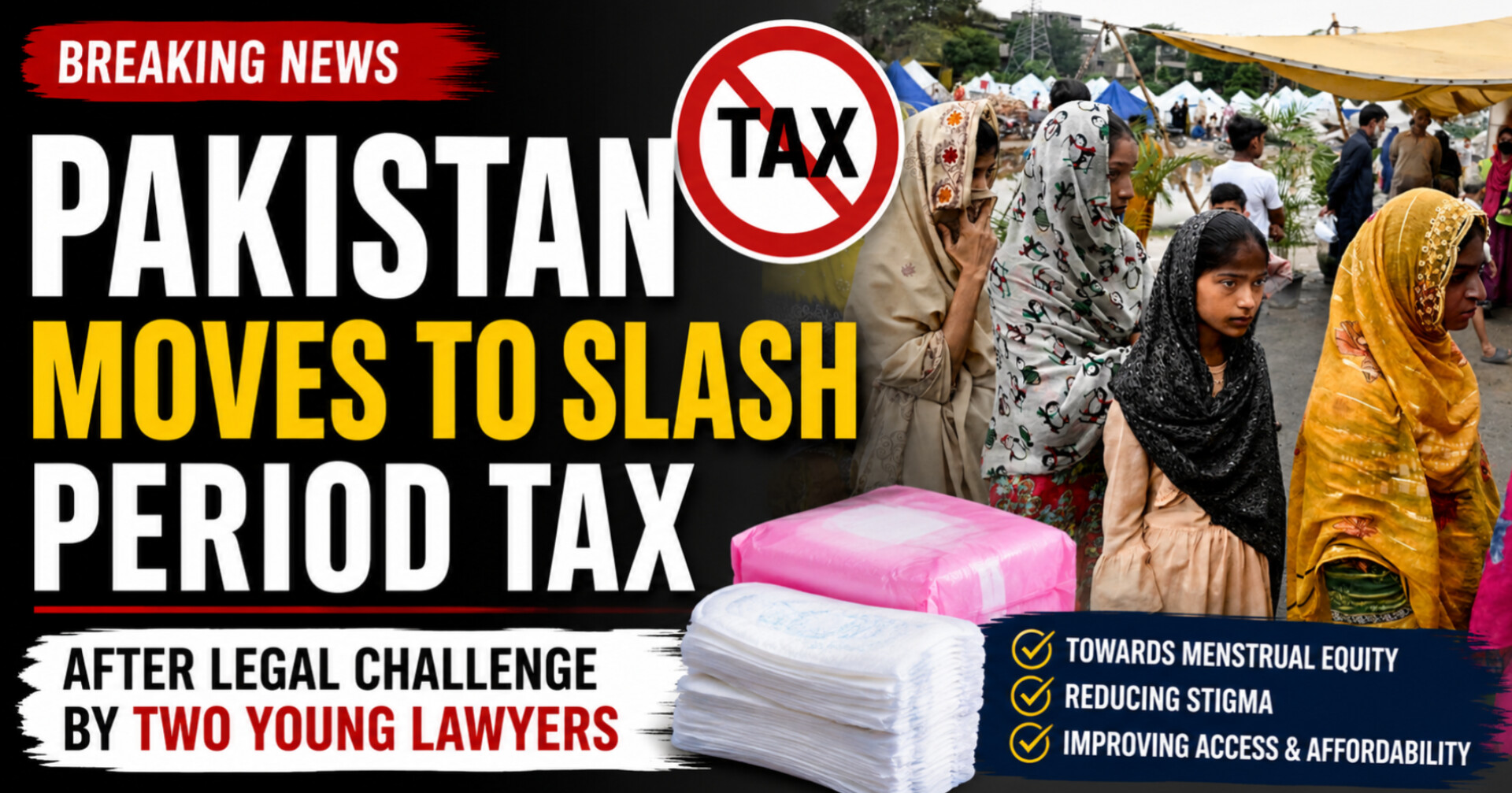
In a significant policy development, Pakistan’s government is reportedly moving toward abolishing sales tax on sanitary products. The proposed measure comes after a legal challenge initiated by two young lawyers and is being welcomed by reproductive justice advocates as a step toward reducing long-standing social stigmas surrounding menstrual health.
The move has sparked discussions about accessibility, affordability, and the broader issue of menstrual equity in the country.
Why the Proposed Tax Removal Matters
Sanitary products are considered essential healthcare items for millions of women and girls. Advocates have long argued that taxing these products places an unnecessary financial burden on consumers, particularly those from low-income households.
By removing sales tax on sanitary products, the government aims to make menstrual hygiene products more affordable and accessible. Supporters believe the measure could help improve menstrual health management while encouraging more open conversations about a topic that has traditionally been surrounded by social taboos.
Legal Challenge That Triggered the Debate
According to reports, the policy shift follows a legal challenge brought forward by two young lawyers. Their petition questioned the taxation of sanitary products and highlighted concerns about affordability and access.
The legal action drew public attention to the issue and contributed to a broader debate about whether essential menstrual hygiene products should be treated differently from non-essential consumer goods.
The challenge also reignited discussions about the role of public policy in addressing health-related inequalities.
Reproductive Justice Advocates Welcome the Move
Reproductive justice advocates have welcomed the reported decision, arguing that it could help normalize discussions around menstrual health and reduce stigma.
For years, campaigners have pointed out that menstruation remains a sensitive subject in many communities, often limiting access to information, healthcare resources, and affordable hygiene products.
Advocates believe that removing sales tax on sanitary products sends an important message that menstrual health is a public health issue rather than a luxury concern.
Potential Impact on Consumers
If implemented, the tax removal could lower the overall cost of sanitary products for consumers across Pakistan.
Supporters say the measure may particularly benefit students, working women, and families managing household expenses. Increased affordability could also encourage wider use of menstrual hygiene products, contributing to better health outcomes.
While details regarding implementation are yet to be fully outlined, the proposal has already generated positive reactions from many public health and women’s rights groups.
A Broader Conversation on Menstrual Health
The reported policy change reflects a growing global conversation about menstrual equity and access to essential hygiene products.
Many countries have reviewed or removed taxes on sanitary products in recent years as part of efforts to improve accessibility and reduce financial barriers.
Pakistan’s proposed move is being viewed as part of this wider discussion, highlighting the importance of affordable menstrual healthcare and social awareness.
As the proposal moves forward, stakeholders will be watching closely to see how the measure is implemented and what impact it may have on consumers and public health initiatives.