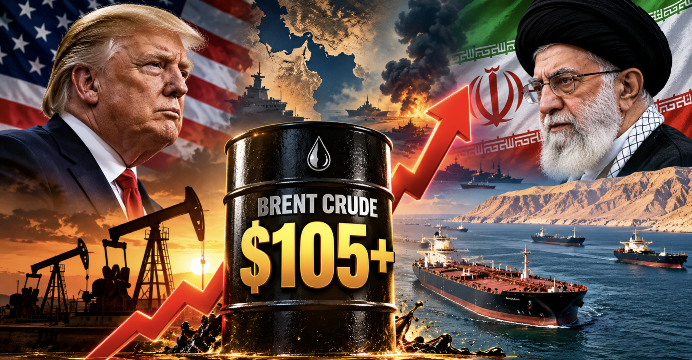
The renewed US–Iran crisis has pushed global oil markets into another period of uncertainty. On 29 September, Brent crude oil traded above $105 per barrel, as investors reacted to fears that escalating tensions in the Middle East could disrupt one of the world’s most important energy supply routes.
While there has not yet been a major physical shortage of oil, financial markets are pricing in the risk that any disruption could quickly tighten global supply and increase fuel prices worldwide.
Why did Brent crude rise above $105?
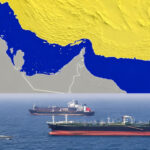
Oil prices often respond to geopolitical events long before supply is actually affected. The latest increase was driven by concerns that military or diplomatic escalation between the United States and Iran could threaten shipping through the Strait of Hormuz, a narrow waterway that carries nearly one-fifth of global oil exports.
As uncertainty increased, traders moved into crude oil futures, pushing Brent above $105 and lifting benchmark prices for a second consecutive trading session.
Why is the Strait of Hormuz so important?
The Strait of Hormuz connects the Persian Gulf to the Gulf of Oman and the Arabian Sea. Countries including Saudi Arabia, Iraq, Kuwait, the UAE, and Iran export massive quantities of crude oil through this route every day.
If shipping is delayed, restricted, or considered unsafe, global energy markets can experience immediate price volatility—even without a complete blockade.
How could this affect the global economy?
Higher oil prices rarely stay confined to the energy sector. Rising crude costs usually increase transportation expenses, airline operating costs, manufacturing costs, and eventually consumer prices.
Potential impacts include:
- Higher petrol and diesel prices
- Increased airline ticket prices
- More expensive shipping and logistics
- Upward pressure on global inflation
- Greater volatility in stock markets
Countries that import large volumes of crude oil, including India, are especially sensitive to sustained increases in international oil prices.
What happens next?
Analysts believe markets will closely monitor diplomatic developments between Washington and Tehran. If tensions ease, oil prices could stabilize. However, any further escalation around the Strait of Hormuz or regional energy infrastructure may keep crude prices elevated and global markets under pressure.
The coming days will be crucial not only for geopolitical stability but also for inflation, fuel prices, and the broader world economy.