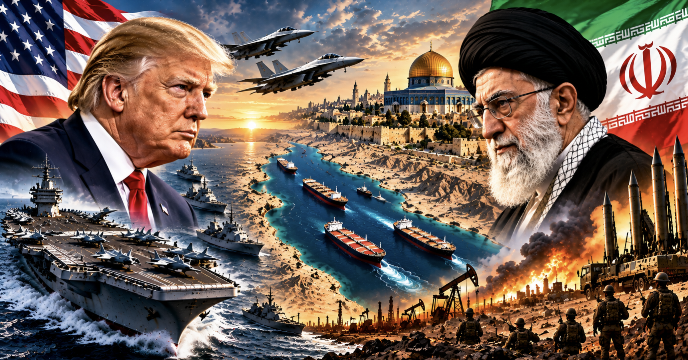
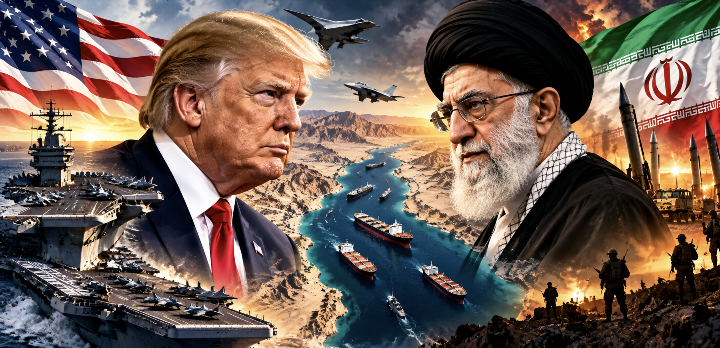
The Middle East is once again at the centre of international security concerns as tensions between the United States and Iran remain high.
U.S. President Donald Trump has rejected Iran’s latest proposal linked to the Strait of Hormuz, while Iranian officials have reportedly prepared for a stronger response if Washington launches another major military operation. At the same time, diplomatic channels remain open, creating a complicated situation in which military pressure and negotiations are continuing simultaneously.
The crisis is not limited to Washington and Tehran. It involves Israel, Gulf countries, international shipping routes, global energy markets and the wider balance of power in the Middle East.
Alongside these geopolitical developments, another debate has gained attention: whether the modern conflict involving Iran has any connection with biblical prophecy.
That question needs to be examined carefully because biblical interpretation is a matter of religious belief, while military developments, diplomatic decisions and international-security risks can be assessed through documented evidence.
Trump and the Iran confrontation
The Trump administration’s approach toward Iran has combined military pressure, sanctions and diplomatic demands.
According to recent reporting, Trump rejected an Iranian proposal that could have involved reopening the Strait of Hormuz within a short period if Washington eased pressure on Tehran. Iran has continued to signal that it is prepared for negotiations while also preparing for the possibility of renewed conflict.
This creates a difficult strategic environment.
If military action expands, Iran could attempt to increase the cost for the United States and its regional partners. If diplomacy succeeds, the immediate pressure on energy markets and shipping could decrease.
The uncertainty itself has become a major security issue.
Why the Strait of Hormuz matters
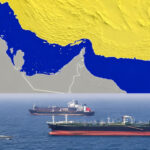
The Strait of Hormuz is one of the world’s most important energy corridors.
Large quantities of oil and liquefied natural gas normally pass through the waterway, connecting producers in the Persian Gulf with international markets.
Recent Reuters reporting found that LNG shipments through the strait increased in September despite continuing security concerns. However, shipping companies remain concerned about the risks associated with the route, including the possibility of further escalation.
Any prolonged disruption could affect more than the countries directly involved in the conflict.
Higher transportation costs can affect energy prices. Higher energy prices can contribute to inflation. And disruptions to shipping can affect industries far away from the Middle East.
That is why a regional conflict can quickly become an international economic-security issue.
Iran’s response and the risk of wider escalation
Recent reporting indicates that Iranian officials are preparing for a potentially broader response if the United States launches another major military campaign.
Reuters reported that Iranian planners have considered expanding potential targets beyond U.S.-linked assets in the Middle East, although no final decision had reportedly been made. Iran has also continued to keep diplomatic channels open.
This illustrates one of the central problems facing international security planners.
A conflict does not necessarily remain confined to the country where the initial military action takes place.
Regional allies, shipping routes, energy infrastructure, cyber systems and military bases can all become potential pressure points.
Israel and the wider Middle East
Israel remains an important part of the regional security equation.
Any major escalation between Iran and the United States could affect Israel, Gulf countries, Iraq, Yemen, Lebanon and other states or territories where armed groups linked to the broader regional confrontation operate.
The result is a security environment with several interconnected fronts rather than a simple two-country confrontation.
This makes diplomatic calculations much more complicated.
Iran, Persia and the Bible
The modern Islamic Republic of Iran is not directly named in the Bible.
However, the ancient Persian Empire appears in several biblical books. Persia is particularly associated with historical figures and events described in books such as Esther, Daniel, Ezra and Nehemiah.
This historical connection is one reason some Christians and religious commentators discuss Iran when interpreting biblical passages concerning Persia.
Some modern interpretations connect passages about Persia and other Middle Eastern powers with future events.
But these interpretations are not universally accepted.
Biblical scholars and religious traditions differ considerably over whether prophetic passages should be understood as references to ancient historical events, symbolic descriptions, future events, or combinations of these approaches.
Therefore, connecting a specific modern military event to a biblical prophecy is an interpretation rather than an established geopolitical fact.
Why prophecy is being discussed again
When major conflicts occur in the Middle East, interest in biblical prophecy often increases.
The reason is partly historical. The region described in many biblical texts overlaps geographically with areas that remain strategically important today.
Iran’s historical connection with Persia adds another layer to the discussion.
Some religious commentators have therefore argued that modern developments deserve attention in light of biblical prophecy. Such arguments have appeared in Christian media during the current Iran crisis.
However, the existence of these interpretations does not establish that current events are fulfilling a particular prophecy.
That distinction is important when discussing the subject in a news context.
From prophecy to international security
The more immediate issue for governments is not whether a biblical prediction is being fulfilled.
The immediate questions are practical.
Will the Strait of Hormuz remain open?
Will military confrontation expand?
Will energy infrastructure be targeted?
Will other countries become directly involved?
Will diplomatic negotiations produce a sustainable agreement?
And can the conflict be prevented from developing into a much wider regional war?
These questions can be examined through military, economic and diplomatic evidence.
The global economic dimension
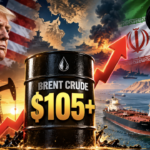
Energy security is one of the strongest links between the Iran conflict and the rest of the world.
The Strait of Hormuz has historically carried a significant share of global oil and gas shipments. Any serious disruption therefore has consequences beyond the Persian Gulf.
Countries that import large quantities of energy are particularly sensitive to changes in oil and gas prices.
For developing economies, higher energy costs can affect transportation, electricity, manufacturing and household expenses.
This means that a military confrontation thousands of kilometres away can eventually affect ordinary consumers around the world.
Could the crisis become a wider international-security problem?
The possibility of wider escalation is one of the main concerns.
A conflict involving the United States and Iran could create pressure on several strategic areas simultaneously: the Gulf, Red Sea, Iraq, Syria, Lebanon and other regional theatres.
Cyberattacks could add another dimension.
Commercial shipping could face higher insurance costs.
Energy companies could face increased security risks.
And governments could be forced to reconsider their military deployments and diplomatic relationships.
This is why international-security experts often look beyond the battlefield when analysing the Iran crisis.
What is fact and what is interpretation?
There are two different discussions taking place.
The first is the documented geopolitical crisis: military deployments, diplomatic negotiations, sanctions, attacks, shipping disruptions and energy-security concerns.
The second is the religious discussion about biblical prophecy and whether ancient references to Persia have relevance to modern Iran.
Both discussions can be examined, but they should not be presented as the same type of evidence.
Military movements can be documented.
Diplomatic statements can be attributed.
Energy shipments can be measured.
But whether a modern event represents the fulfilment of biblical prophecy depends on theological interpretation.
Conclusion
The Iran crisis has moved far beyond a dispute between two governments.
The confrontation involving Donald Trump and Iran is connected to regional military security, the Strait of Hormuz, international shipping, energy markets and the wider balance of power in the Middle East. Recent developments show that diplomacy remains possible while preparations for further confrontation continue.
At the same time, the conflict has revived interest in biblical references to Persia and their possible relevance to modern Iran.
For a responsible analysis, however, religious interpretation and verified geopolitical developments must remain clearly separated.
Whether viewed through the lens of international security, energy markets, military strategy or religious belief, one fact is clear: developments involving Iran have consequences that extend well beyond the Middle East.